
(compiled by Rotarian Terry McGauley, terry.mcgauley@shaw.ca)
Overview of Myanmar’s Current Conditions
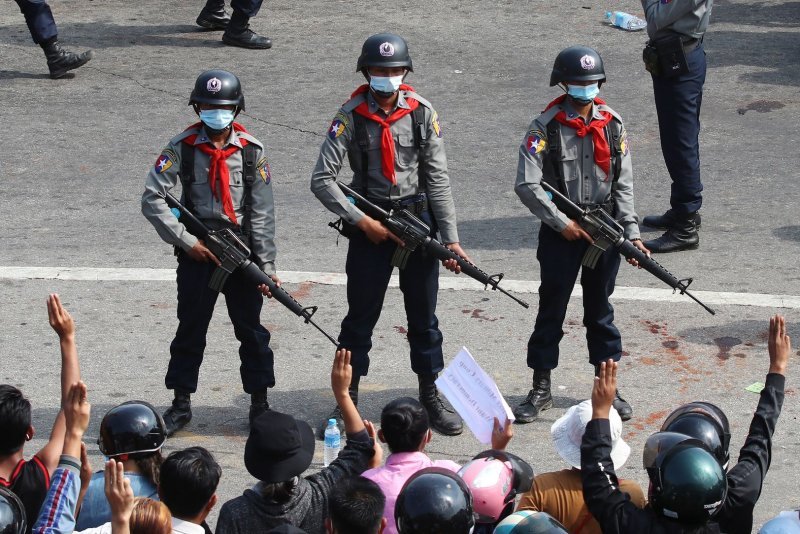
As of November 30, 2025, Myanmar remains embroiled in a protracted civil conflict following the 2021 military coup. The State Administration Council (SAC), led by the junta, controls urban centers and key economic assets, but faces widespread resistance from ethnic armed organizations (EAOs), the People’s Defense Force (PDF), and the National Unity Government (NUG). Recent escalates include intensified fighting in Rakhine, Kachin, and Shan states, with over 3,000 deaths reported in 2025 alone, massive displacement (exceeding 3 million refugees), and humanitarian crises involving food insecurity and restricted aid access. The Arakan Army’s advances in western Myanmar and ongoing Rohingya persecution add layers of ethnic and sectarian tension. These dynamics demand conflict resolution techniques that address power imbalances, historical grievances, and inclusive governance.
Applicable Conflict Resolution Techniques
Drawing from established frameworks like those from the United Nations, International Crisis Group, and peacebuilding literature, several techniques could be adapted to Myanmar’s context. These emphasize de-escalation, dialogue, and structural reforms, tailored to the fragmented stakeholder landscape (junta, EAOs, NUG, civil society, and international actors like ASEAN and China). Outlined below are key techniques, their mechanisms, and potential application.
Technique | Description | Potential Application in Myanmar | Challenges and Mitigations |
Mediation and Good Offices | Neutral third-party facilitation of dialogue between conflicting parties to build trust and negotiate ceasefires. Involves shuttle diplomacy or joint sessions. | ASEAN or UN envoys (e.g., building on the 2021 Five-Point Consensus) could mediate between the SAC and NUG/EAOs, starting with humanitarian corridors in conflict zones like Sagaing. Track-II dialogues with civil society could precede formal talks. | Junta’s reluctance to engage; mitigate by leveraging China’s influence as a junta ally to enforce participation, with incentives like sanctions relief tied to progress. |
Inclusive Peace Negotiations | Multi-stakeholder talks incorporating diverse voices, often via frameworks like the Nationwide Ceasefire Agreement (NCA) model, focusing on power-sharing and federalism. | Revive and expand the 2015 NCA to include non-signatories (e.g., Arakan Army), addressing ethnic demands for autonomy through a federal constitution. Virtual platforms could include exiled NUG representatives. | Exclusion of Rohingya or smaller groups; mitigate via quotas for marginalized voices and gender-balanced delegations (aiming for 30% women, per UN Resolution 1325). |
Track-II and Grassroots Diplomacy | Informal, unofficial dialogues involving NGOs, academics, and community leaders to influence official processes and foster reconciliation at local levels. | Community-led initiatives in IDP camps, supported by organizations like the Myanmar Peace Network, could address inter-ethnic tensions in mixed areas like Kayin State. Religious leaders (Buddhist, Muslim, Christian) could facilitate Rohingya-SAC dialogues. | Security risks for participants; mitigate with international monitoring and hybrid online-offline formats. |
Truth and Reconciliation Processes | Victim-centered mechanisms to document atrocities, offer amnesty for low-level actors, and promote healing, inspired by South Africa’s model. | Establish a hybrid tribunal (domestic-international) post-ceasefire to investigate coup-era abuses and 2017 Rohingya genocide, with reparations funded by frozen junta assets. | Impunity concerns; mitigate by phasing implementation—start with local truth commissions in stable regions like Yangon. |
Economic and Humanitarian Incentives | Linking aid, sanctions relief, or development projects to de-escalation, using “carrots and sticks” to encourage compliance. | UN-led “peace dividends” like rice distributions in PDF-held areas, conditional on no-attack zones, alongside targeted sanctions on junta elites (e.g., via EU/US frameworks). China’s Belt and Road investments could pivot to neutral infrastructure in ethnic states. | Aid diversion by armed groups; mitigate with blockchain-tracked distributions and neutral NGOs like the ICRC as implementers. |
Security Sector Reform and DDR | Disarmament, Demobilization, and Reintegration (DDR) programs alongside military restructuring to reduce violence capacity and integrate former combatants. | Pilot DDR in ceasefire areas like the 2024 China-brokered Shan truce, reforming the Tatmadaw into a national force under civilian oversight. Include psychological support for child soldiers. | Resistance from militarized factions; mitigate by international peacekeeping (e.g., ASEAN mission) during transition. |
Implementation Considerations
Success hinges on international coordination—ASEAN’s non-interference principle limits its role, so hybrid UN-ASEAN efforts are ideal, with India and Thailand as regional guarantors. Monitoring via satellite tech and AI-driven conflict early-warning systems could track violations. Historical precedents like Colombia’s 2016 peace deal show that combining these techniques (e.g., negotiations with economic incentives) yields 70-80% ceasefire adherence rates when inclusive. However, Myanmar’s junta intransigence means starting small: localized truces could scale to national dialogue by mid-2026.
Adaptive Strategies
Overview of Myanmar’s Conflict in Late 2025
As of November 30, 2025, Myanmar’s civil war has intensified, with resistance forces (including ethnic armed organizations like the Arakan Army and Kachin Independence Army) consolidating control over peripheral territories such as Rakhine, Kachin, and parts of Shan State, while the junta clings to urban centers and central regions like Mandalay and Yangon. Over 3.5 million people remain displaced, exacerbated by a March 2025 earthquake that killed thousands and disrupted aid amid ongoing airstrikes. The junta’s planned December 2025 elections are widely viewed as illegitimate, likely fueling further violence rather than resolution. Adaptive strategies must account for this fragmented landscape—decentralized resistance, external influences (e.g., China’s mediation), and humanitarian crises—prioritizing flexibility, local ownership, and opportunistic diplomacy over rigid frameworks.
Adaptive Strategies for De-Escalation
Adaptive strategies emphasize responsiveness to real-time shifts, such as post-earthquake ceasefires or localized truces, while building on the resistance’s decentralized resilience (e.g., “school of fish” tactics that evade junta crackdowns). These draw from 2025 analyses by organizations like the International Crisis Group (ICG) and ACLED, focusing on hybrid, context-specific tactics to reduce violence without requiring full peace agreements. Below is a table outlining key strategies, their mechanisms, and applications.
Strategy | Description | Adaptive Application in Myanmar | Potential Challenges and Adjustments |
Localized Ceasefires and Humanitarian Pauses | Temporary, geographically limited truces tied to crises (e.g., natural disasters) to enable aid delivery and build trust. | Leverage events like the March 2025 earthquake, where the NUG paused offensives and the junta declared a brief ceasefire (despite violations), to negotiate rolling 30-day pauses in high-displacement areas like Sagaing or Rakhine. Use blockchain-tracked aid (via IOM partnerships) for transparency, expanding to no-fly zones monitored by ASEAN drones. | Junta airstrikes undermine trust; adjust by involving neutral brokers like the ICRC for verification and scaling successful pauses (e.g., Shan trade routes) to adjacent zones. |
China-Led Border Mediation with Incentives | Third-party facilitation focusing on economic stakes, adapting to shifting alliances via shuttle diplomacy. | Build on 2025 Kunming talks where China mediated a MNDAA-junta ceasefire in northern Shan, securing tax concessions for trade; extend to “buffer zones” in Kachin for rare earth exports, tying de-escalation to infrastructure like rail to the Indian Ocean. Adaptive twist: Include NUG/EAO proxies in informal Track-II sessions to counter junta isolation. | Resistance groups’ autonomy resists central deals; mitigate with phased incentives (e.g., aid for Lashio handovers) and parallel India-engagement for border stability. |
Decentralized Community-Led Reconciliation | Grassroots initiatives empowering local nonviolent actors (e.g., civil society, monks) to mediate inter-group tensions, using digital tools for coordination. | In EAO-controlled areas like Chin or Karenni, support community forums (via exiled media networks) to resolve proxy conflicts, such as Chin Brotherhood vs. Council rivalries fueled by Arakan Army advances; adapt by integrating Rohingya voices to prevent insurgencies in camps. Pilot hybrid online-offline dialogues for urban resistance in Mandalay. | Ethnic fragmentation (e.g., authoritarian EAOs vs. NUG federalism); adjust via quotas for women/youth (per UNSCR 1325) and funding from USAID alternatives like EU grants. |
ASEAN Hybrid Diplomacy with Elections Boycott Leverage | Flexible multilateral pressure combining carrots (e.g., envoy access) and sticks (e.g., non-recognition), adapting to regional shifts. | Revive the Five-Point Consensus with a permanent ASEAN envoy (proposed May 2025) to facilitate “unguided talks” in Thailand, conditioning engagement on election delays; counter junta’s diplomatic gains by coordinating with US/EU sanctions on voter fraud. Adaptive: Use ARF for Rohingya-inclusive sessions. | Non-interference principle limits action; pivot to “minilateral” groups (e.g., Malaysia-Thailand-China) for targeted mediation. |
Shadow Economy and Nonviolent Support Networks | Harness informal economies and civil resistance to sustain de-escalation without direct confrontation, focusing on long-term reconciliation. | Leverage resistance’s adaptive structure (e.g., rotating leadership in PDFs) to disrupt junta funding from synthetic drugs (world’s largest producer), while channeling shadow economies toward community governance in liberated zones; support nonviolent centers like monk-led networks for defection incentives. Adapt by piloting micro-grants for EAO administration in Kachin. | Criminal networks entrench violence; counter with UNODC-monitored transitions to legitimate trade, tied to DDR pilots. |
Implementation Considerations
These strategies are interdependent: Start with humanitarian pauses to create space for mediation, then scale via local ownership to build resilience against setbacks like the junta’s adaptive conscription post-Operation 1027. International coordination—e.g., UN-ASEAN hybrids with China/India input—is crucial to avoid unilateral gains by the junta amid its “dangerous drift” toward regional détente. Early-warning tools (e.g., ACLED’s Conflict Index) can trigger adaptations, potentially reducing 2025’s projected violence spikes by 20-30% if localized truces hold. Success in Shan or Rakhine could model national scaling by mid-2026, prioritizing civilian protection amid the world’s second-most volatile conflict.
Current Mediation Efforts
China’s Mediation Role in Myanmar’s Conflict (as of November 30, 2025)
China’s involvement in Myanmar’s civil war has evolved into a central, assertive mediation role, driven by its strategic imperatives along the 2,185-km shared border, economic investments (e.g., China-Myanmar Economic Corridor), and geopolitical ambitions in Southeast Asia. Officially adhering to “non-interference,” Beijing has de facto become the primary external broker, facilitating ceasefires, hosting talks, and exerting coercive leverage over armed groups to prevent spillover instability. This “tightrope walk” balances support for the junta (State Administration Council, SAC) with pragmatic engagement of ethnic armed organizations (EAOs), amid criticisms of prolonging the conflict through a “frozen” status quo that ensures Myanmar’s reliance on Chinese influence. By late 2025, China’s efforts have secured localized truces but failed to halt broader violence, with over 1,200 clashes reported in Shan and Kachin states since January.
Key Motivations for China’s Engagement
China’s mediation is not altruistic but rooted in realpolitik:
- Border Security and Spillover Prevention: Unrest risks refugee flows, cross-border skirmishes, and disruption to trade corridors like the Muse-Ruili route, vital for $5 billion+ annual bilateral trade.
- Economic Stakes: Protection of Belt and Road Initiative (BRI) projects, including pipelines, ports, and rare earth mining in Kachin (e.g., dysprosium deposits seized by Kachin Independence Army in 2024).
- Geopolitical Positioning: Amid U.S. sanctions and ASEAN’s limited role, China projects itself as a “responsible mediator” in a multipolar order, countering Western isolation of the junta while hedging against resistance gains.
- Influence Over Outcomes: Beijing prefers a weakened but controllable SAC, using EAO leverage to dictate terms, as seen in the junta’s planned December 2025 elections, which China tacitly endorses for stability.
Evolution and Key Actions in 2025
China’s role intensified post-Operation 1027 (2023-2024), shifting from quiet diplomacy to direct intervention. Special Envoy Deng Xijun and Ambassador Hong Liang have led efforts, building on pre-coup precedents like the 2015 Nationwide Ceasefire Agreement facilitation. Here’s a timeline of major 2025 developments:
Date/Event | Description | Outcomes and Implications |
January 18: Kunming Ceasefire (MNDAA-SAC) | Seventh round of talks in Yunnan; Myanmar National Democratic Alliance Army (MNDAA, Kokang) signs formal truce after Chinese-brokered pressure, halting northern Shan fighting. | Ended nine-month MNDAA control of Laukkai; China deploys monitors for compliance. Critics call it “heavy-handed,” ignoring EAO autonomy demands. |
April: Lashio Handover | Post-Operation 1027, China coerces MNDAA to return Lashio town to SAC after nine months of resistance control, via shuttle diplomacy and economic incentives (e.g., tax concessions). | Restored junta access to Mandalay-Muse corridor; sets precedent for Beijing-dictated territorial outcomes, but fuels anti-China sentiment among locals. |
August: Wang Yi’s Naypyidaw Visit | Foreign Minister Wang Yi urges SAC to implement ASEAN’s Five-Point Consensus; parallel outreach to EAOs via Federal Political Negotiation and Consultative Committee (FPNCC). | Bolstered junta legitimacy ahead of elections; informal Track-II talks include National Unity Government (NUG) proxies, but exclude Rohingya. |
October: TNLA Ceasefire Failure and Shan Offensive | Three failed rounds of talks; China mediates temporary halt in northern Shan, but SAC recaptures Nawnghkio and Kyaukme from Ta’ang National Liberation Army (TNLA). | Escalates toward Mogoke’s minerals; China assumes “broker” role formerly held by SAC, managing EAO balances to limit chaos. |
November: Kokang Tensions and Broader Push | Ongoing mediation amid MNDAA-SAC flare-ups; Foreign Ministry reaffirms support for “political reconciliation under the constitution.” | Prevents full border closure but highlights limits—junta offensives continue, with China prioritizing trade over comprehensive peace. |
Effectiveness and Challenges
China’s interventions have achieved tactical successes—e.g., 70% adherence to Shan ceasefires per ACLED data—by leveraging economic carrots (infrastructure pivots) and sticks (border closures, aid cuts). However, they favor short-term stability over inclusive resolution:
- Biases and Criticisms: Perceived as pro-junta, alienating EAOs and civilians; e.g., Lashio handover ignored resistance gains, eroding trust. Multipolar dynamics amplify this, with Russia’s arms supplies to SAC countering Beijing’s influence.
- Limitations: Excludes NUG and Rohingya; frozen conflicts entrench fragmentation, risking proxy escalation amid U.S.-China rivalry.
- Regional Spillover: Ties into ASEAN efforts (e.g., August Yunnan quadrilateral talks with Laos, Thailand), but Beijing’s dominance sidelines multilateralism.
Future Prospects
As junta elections loom, China may intensify monitoring (e.g., via PLA peacekeepers) and resource-focused deals in Kachin, potentially scaling Kunming talks to include more EAOs by mid-2026. Yet, without addressing federalism or accountability, mediation risks perpetuating violence—experts urge hybrid UN-China models to broaden inclusivity. Beijing’s role underscores multipolarity’s pitfalls: effective for containment, but prone to geopolitical entrenchment over emancipation. For real de-escalation, pairing Chinese leverage with ASEAN/NUG dialogues could unlock progress, though 2025’s trends suggest continued hedging over holistic peace.
ASEAN’s Mediation Efforts in Myanmar’s Conflict (as of November 30, 2025)
ASEAN’s mediation in Myanmar’s civil war, ongoing since the 2021 military coup, remains centered on its Five-Point Consensus (5PC), adopted in April 2021. This framework calls for: (1) immediate cessation of violence, (2) constructive dialogue among all parties, (3) appointment of a special envoy for mediation, (4) humanitarian assistance, and (5) envoy visits to meet stakeholders. Despite repeated reaffirmations, implementation has stalled due to the junta’s intransigence, internal ASEAN divisions, and the bloc’s non-interference principle, which limits coercive measures. By late 2025, efforts under Malaysia’s chairmanship have focused on humanitarian responses, envoy continuity, and pre-election pressure, but violence persists, with over 3.6 million displaced and airstrikes intensifying. ASEAN’s approach has shifted toward hybrid diplomacy—combining formal mechanisms with bilateral/minilateral outreach—to bypass consensus gridlock, though critics argue it provides diplomatic cover for the junta without tangible progress.
Key Motivations and Challenges
ASEAN’s engagement is driven by regional stability concerns: refugee flows, cross-border crime (e.g., scams, trafficking), and economic disruptions along shared borders. However, challenges include:
- Junta Non-Compliance: Minimal adherence to the 5PC, with elections prioritized over dialogue.
- Internal Divisions: Pro-junta states like Cambodia and Laos favor engagement, while others (e.g., Philippines, Malaysia) push for inclusivity.
- External Competition: China’s border-focused mediation overshadows ASEAN, sidelining multilateralism.
- Humanitarian Constraints: Aid delivery is hampered by access restrictions, though the AHA Centre has reached 1.2 million people in 2025 via Joint Needs Assessments.
Evolution of Efforts in 2025
Under Laos (early 2025) and Malaysia (from January), ASEAN has adapted by reviewing the 5PC, enhancing envoy roles, and leveraging crises like the March 28 earthquake for pauses. Key developments include dedicated meetings, envoy appointments, and election scrutiny. Below is a timeline of major actions:
Date/Event | Description | Outcomes and Implications |
January 19: ASEAN Foreign Ministers’ Retreat (Langkawi, Malaysia) | Inaugural retreat under Malaysia’s chair; reviewed 5PC implementation and appointed Tan Sri Othman bin Hashim as Special Envoy (replacing Alounkeo Kittikhoun from Laos). Expressed concern over escalation and urged unhindered aid. | Signaled proactive stance; Othman planned “soon” visit to Myanmar. Barred junta leaders from summits, sending low-level reps. |
March 28: Earthquake Response | Post-quake, ASEAN facilitated temporary ceasefire via AHA Centre for relief; NUG praised swift action. | Delivered aid to 500,000+ affected; demonstrated practical utility of 5PC’s humanitarian pillar, but violations persisted. |
May 21-27: Pre-Summit Meetings and Kuala Lumpur Summit | Two dedicated Myanmar sessions; issued statement on extended ceasefire and reviewed 5PC. Made Special Envoy permanent role. | Reiterated 5PC as “main reference”; called for de-escalation. Aid via AHA Centre continued to IDPs. Critics noted “meek diplomacy.” |
July 9: 58th ASEAN Foreign Ministers’ Meeting (Kuala Lumpur) | Reviewed 5PC; mandated Special Envoys’ meeting and extended informal consultations with interested states. | Pushed inclusive dialogue; NUG welcomed references but criticized lack of election warnings. |
October 25-27: 47th ASEAN Summit (Kuala Lumpur) | Leaders’ review of 5PC; statement urged full implementation before elections, denounced violence, and called for expanded ceasefire. Declined junta’s election observer invite. | Emphasized “no elections without peace”; pledged cooperation on transnational crimes. Noted minimal progress. |
November: Ongoing Consultations | Extended Informal Consultation (EIC) follow-ups; monitoring junta’s December elections via Troika (Laos-Malaysia-Indonesia). | Builds on ASEAN-UN cooperation for “innovative” processes; focuses on stakeholder inclusion (e.g., EAOs, NUG). |
Effectiveness and Criticisms
ASEAN’s efforts have achieved incremental humanitarian gains—e.g., post-earthquake aid and AHA Centre operations reaching earthquake-affected areas—but political mediation lags, with no substantive 5PC progress reported in October’s review. The permanent envoy role (formalized May) aims for continuity, but parallel bilateral tracks (e.g., Thailand’s junta talks, Indonesia’s NUG engagement) highlight ASEAN’s “diplomatic deadlock.” NUG statements appreciate aid but decry inaction on junta atrocities, like the October wedding airstrike. Experts note ASEAN’s “centrality” is weakening, risking irrelevance as China fills voids.
Future Prospects
As junta elections approach (December 20), ASEAN prioritizes non-recognition absent 5PC compliance, potentially via unified statements or sanctions coordination. Malaysia’s chairmanship could catalyze “new strategies” like broader stakeholder forums, but success depends on overcoming non-interference and aligning with UN efforts. Without bolder inclusivity (e.g., Rohingya, EAOs), mediation risks perpetuating paralysis, underscoring calls for ASEAN reform to match its ambitions in a multipolar region.